
Role: Interaction Designer / Product designer / Technician / Programmer
Project Type: 3 weeks
Client / Partner: NCAD
Team: Rebecca Jones
Contribution
- Microsoft MakeCode, block coding with micro:bits
- Rapid prototyping
- Woodwork
- Laser cutting
- Fusion 360 CAD modelling

POM — Peace Of Mind
Intro
POM is a speculative physical computing artefact that reimagines how we might interact with digital systems.
It explores reassurance, with an alternative to screen-heavy, alert-driven systems, by translating information into a calm, physical interaction. It demonstrates different ways that technology can be interacted with and felt.
To address night-time uncertainties, POM uses four slow, deliberate rotations, to reveal the state of key household elements with a simple glowing light, before turning itself off on the final rotation. This interaction transforms abstract data into a physical, almost ritualistic bedtime experience.
Crafted from glass and wood, POM merges digital intelligence with traditional craftsmanship, designing technology to be human.

Concept & Design Thinking

The concept was rooted in a simple behavioural insight:
Night-time often amplifies small uncertainties - “Did I turn that off?”
This can disrupt rest by creating common reassurance behaviors, such as repeatedly checking doors or switches before sleep.
Instead of solving this through apps or alerts, I explored...
Ambient feedback vs. active checking
Physical interaction vs. digital overload
Ritual vs. interruption
Project Aim
As screen fatigue and doom-scrolling begins to weigh on society, this project asks:
How might we design meaningful technology that exists beyond the screen?
Investigate how human-centered rituals, such as bedtime routines, can be supported through design.
Create an intervention that helps ease cognitive load and anxiety before sleep.
Challenge the assumption that more technology means more screens or complexity.
Explore an alternative interaction paradigm for reassurance. Not a production ready system, but an investigation into how ambient, physical feedback could complement or replace screen-based interfaces.

Did I lock the front door?
The front door input consists of a box housing a micro:bit, designed to clip onto the existing lock mechanism. The device detects the position of the lock, registering whether it has been turned left into a locked state or returned to an unlocked position.
This input is transmitted to the main bedside device
Design considerations :
-
Designed to fit standardised oval lock heads
-
Durable enough to function as the lock head itself
-
Does not interfere with the lock’s operation, instead becomes the lock

Did I turn that off?
The wall switch input is built using a simple circuit of copper tape and braided copper wire, embedded within a laser-cut acrylic channel. The circuit connects directly to a micro:bit housed within the box.
When the wall switch is turned on, the circuit is completed. This change is detected by the micro:bit and transmitted to the main bedside device.
The bedside device then reflects the state visually:
Design considerations :
-
Does not interfere with the user’s interaction with the switch
-
Versatile and customisable, designed to fit a variety of switch types
-
Incorporates a matching logo on the main device to reduce cognitive load
-
Fully independent from mains power for enhanced safety

How do I check?
There are four sides to POM, each representing: A wall switch, the front door, another wall switch, off.
This encourages the act of a slow rotation as part of a night time ritual. Checking the status of the 3 household objects before the final rotation to turn POM off.
When the door is locked/switches are off, the LED glows an ambient blue to instill calm.
When the door is unlocked/switches are on, the LED pulses a warm orange. No alarms, no drama, just knowing.
Design considerations :
-
Tactile icons to show which household object is being referenced
-
A rounded edge to invite the hand
-
Power cable on the base for intuitive horizontal use
-
A "floating" LED encased by glass, reflective of distance with simultaneous control in the palm of the hand. Adding heightened reassurance
-
Woodwork subtly communicating that it has been shaped through a human process rather than mass production. The visible texture and warmth of wood invites touch and interaction, creating a more personal and approachable experience
The Process
Prototyped the micro:bit casing with cardboard
Tested Micro:bit functionality - decided on circuits
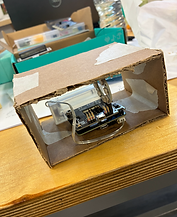

Used Microsoft MakeCode to program the micro:bit

Experimented with various shapes and sizes - decided on long and horizontal, with rotation as an interaction focus

Prototyped with cardboard and tape

Prototyped with MDF

Iterated the measurments - fixed depth oversight

Examined light effects with various material combinations

Explored 3D printed white PLA - decided this gave the best ambient glow

Prototyped with plywood

Tested the micro:bit code. A simple circuit on a switch connected to a micro:bit, with another micro:bit receiver dictating LEDs
Further tested LED colours, the copper circuit and the micro:bit positioning output - chose not to cover the sides, visibilty of system and reference to control over distance


Began assembling components

3D printed the LED casing with a CAD mockup found on "Thingiverse" - antique feel to compliment craft tone
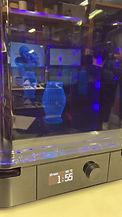
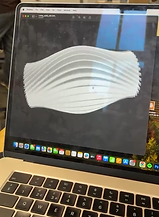
CNC machined the wooden casing and boxes

Tested the electronics

Used a belt sander to smooth the edges of the CNC'd boxes

Manually sanded the boxes to prepare for wood stain

Used a belt sander to smooth the edges - rounded to invite the hand for tactility
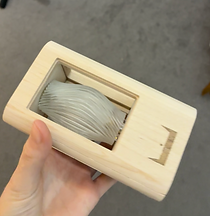
Laser cut symbols onto the casing components and glued them together

Laser cut the internal panels for the main casing from plywood

Fit the electronics
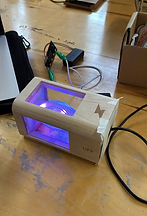
Tested various wood stains

Iterated the symbols and laser cut new pieces - Increased tactility for dark bedrooms

Cut holes in the box and glued wire to the casing

Laser cut acrylic to make a casing for the copper wire switch circuit - copper associated with warmth and non visible household elements like pipes


Outcome
The outcome is a fully functional speculative prototype that bridges traditional craft and digital technology.
It offers an alternative to screen-heavy, alert-driven systems by translating information into a calm, physical interaction. This piece explores different ways technology can be interacted with and felt.